5 Common Decorating Mistakes and How to Avoid Them.
Are you making any of these common decorating mistakes? Even the most beautiful spaces can feel a little “off” if they’re styled incorrectly. By avoiding these five frequent interior design pitfalls, you can transform your home into a harmonious and stunning masterpiece.
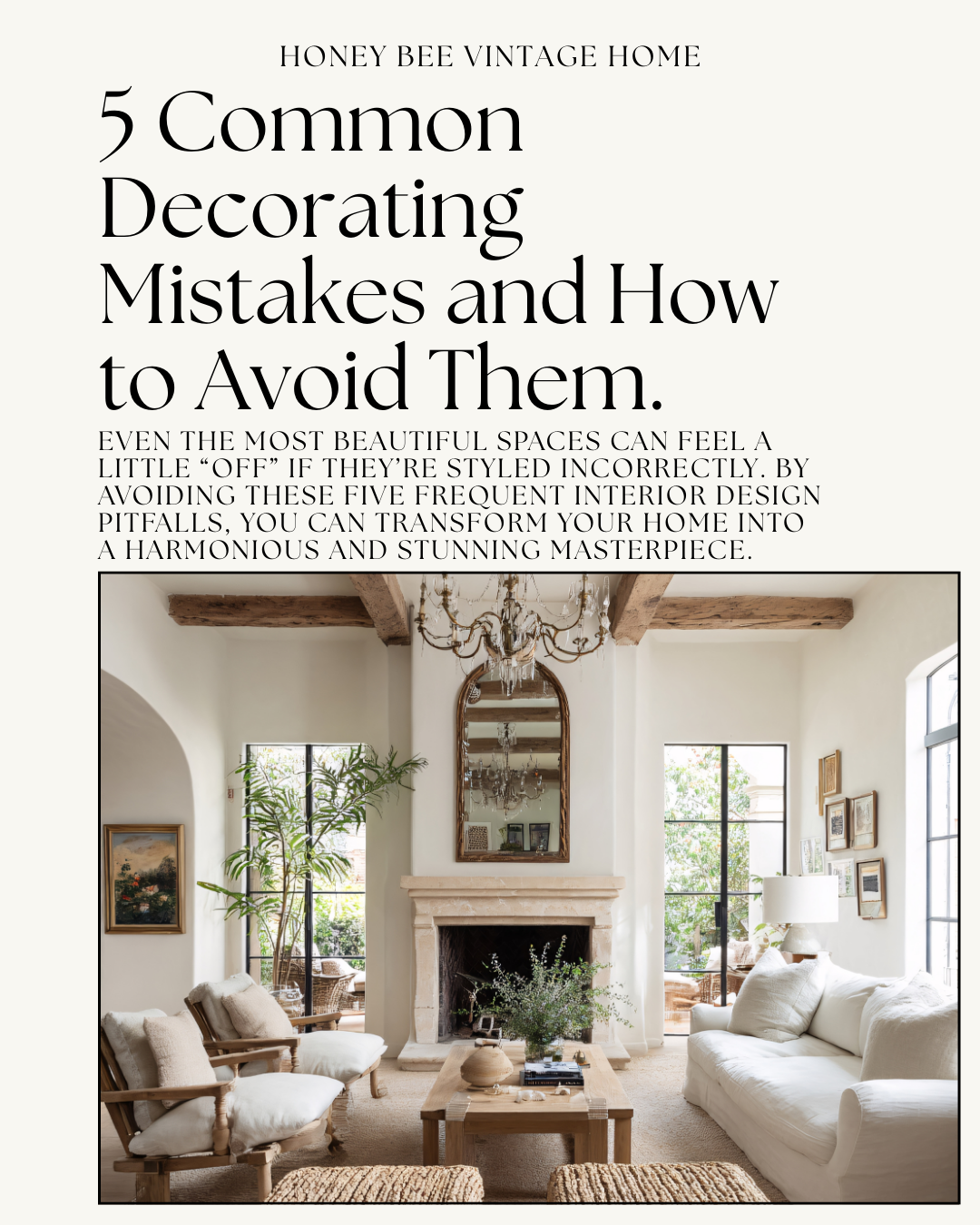
Take this living room, for example—it feels fresh and timeless thanks to the mix of cozy textiles, thoughtfully curated art, and a blend of styles from different eras, all coming together to create a purposeful, inviting space.
You can achieve the same in your own home. Discover the five decorating mistakes I’ve encountered throughout my design career, and learn exactly how to avoid them so you can craft a space that truly feels like it came out of a magazine.
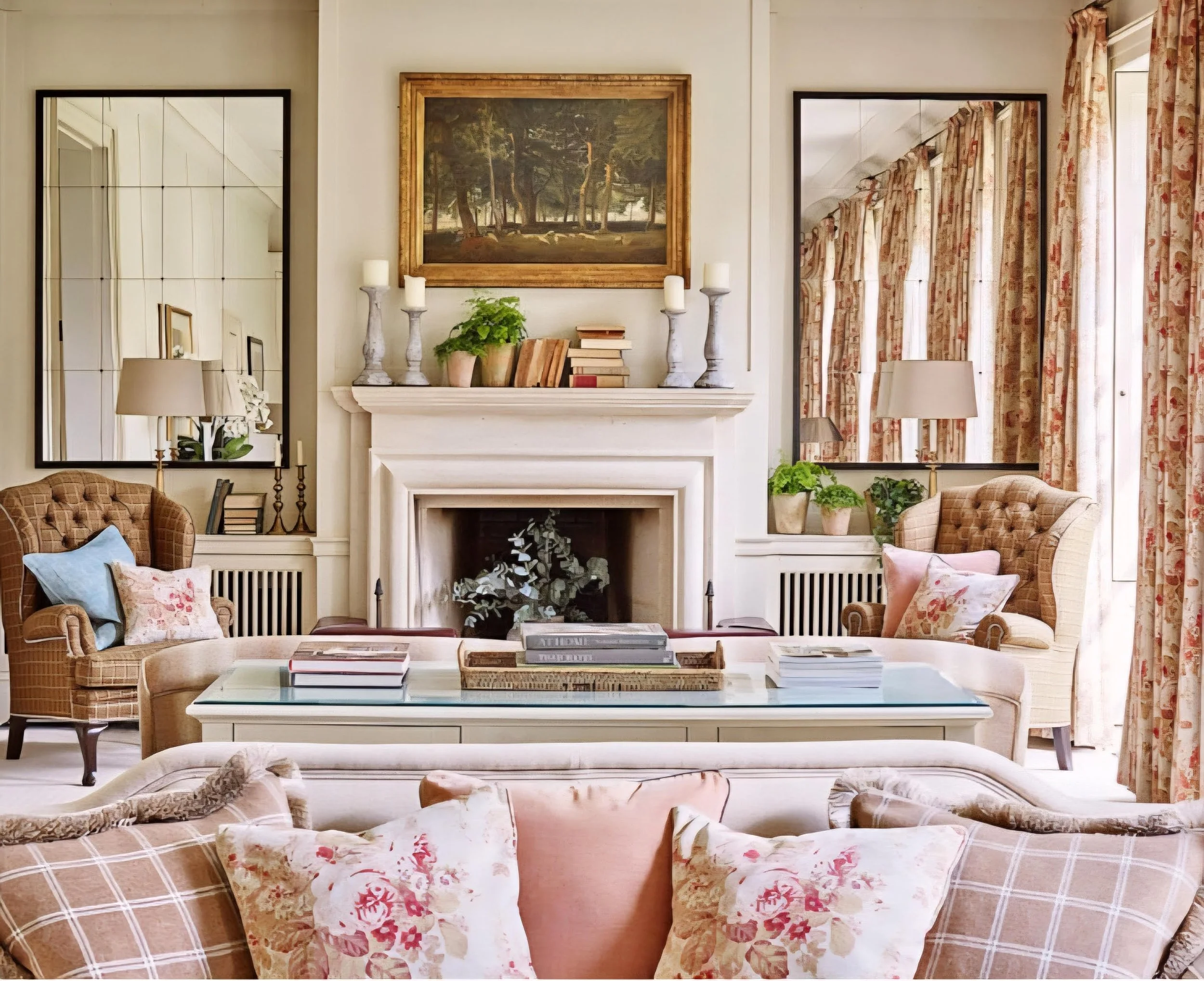
Image courtesy Homes & Gardens
#1 Buying Matching Furniture
Big-box stores try to sell you an entire matching room because it boosts their profits—but it leaves your space looking bland and straight off a showroom floor. Don’t fall for it. Instead, pick one or two pieces from those collections and blend them with items from different sources. Mix and match end tables, experiment with varied finishes, and always include at least one antique piece. Combining different eras and textures creates a warmer, more character-rich design.
#2 Ignoring Scale & Proportion
If a room feels “off,” the issue is often scale. Artwork hung too low, rugs that are too small, or overhead lights that feel undersized can all make a space feel cold and unfinished. Aim to hang art at eye level, but if you have high ceilings, consider stacking pieces to visually bridge the height. For chandeliers, a simple guideline is to choose a diameter in inches that equals the room’s length plus width in feet. When it comes to rugs, make sure it’s large enough for at least the front legs of your main furniture to rest on. In a living room, leave roughly 18 inches of bare floor between the rug and the walls—though tighter spacing works in smaller areas. In a dining room, the rug should extend 2 to 3 feet beyond the table on all sides so chairs stay fully on the rug when pulled out.
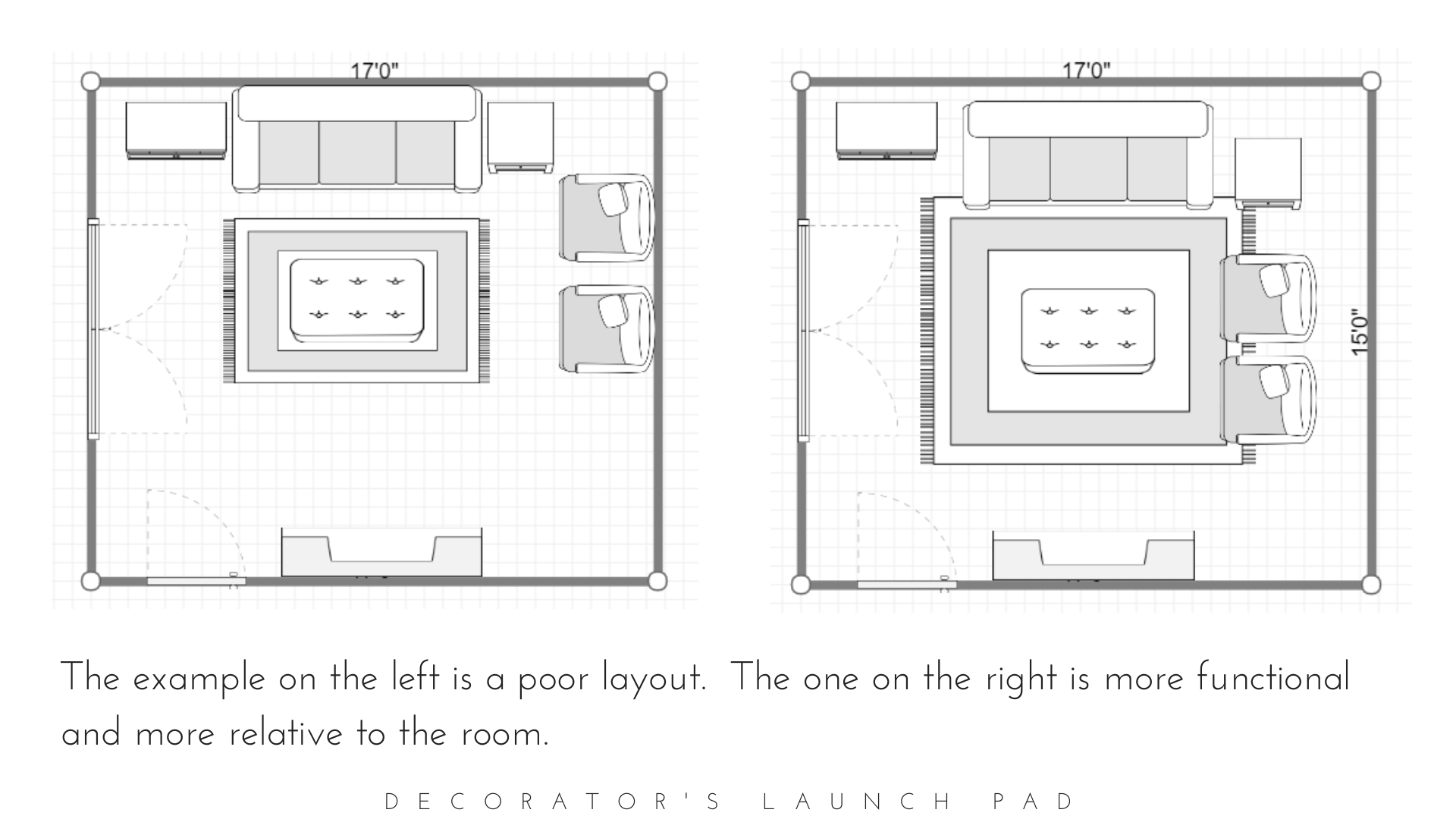
This image is from the Space Planning course available though my Decorator’s Launch Pad series. CONTACT US for more information on any of our courses.
#3 Pushing Furniture Against the Wall
As a designer, I often meet clients who aren’t sure how to arrange their furniture, so they default to pushing everything against the walls. This usually creates a cramped, unfinished look—with unusable dead space in the center and a conversation area that feels tight and awkward. Even pulling furniture away from the walls by just a few inches can make a room feel more open, balanced, and easier to navigate, while also improving lighting flow. In the graphic shared above, the image on the right shows how simple adjustments to furniture placement can dramatically elevate a space. Sometimes the smallest shifts make the biggest impact.
#4 Not Utilizing Accent Lighting
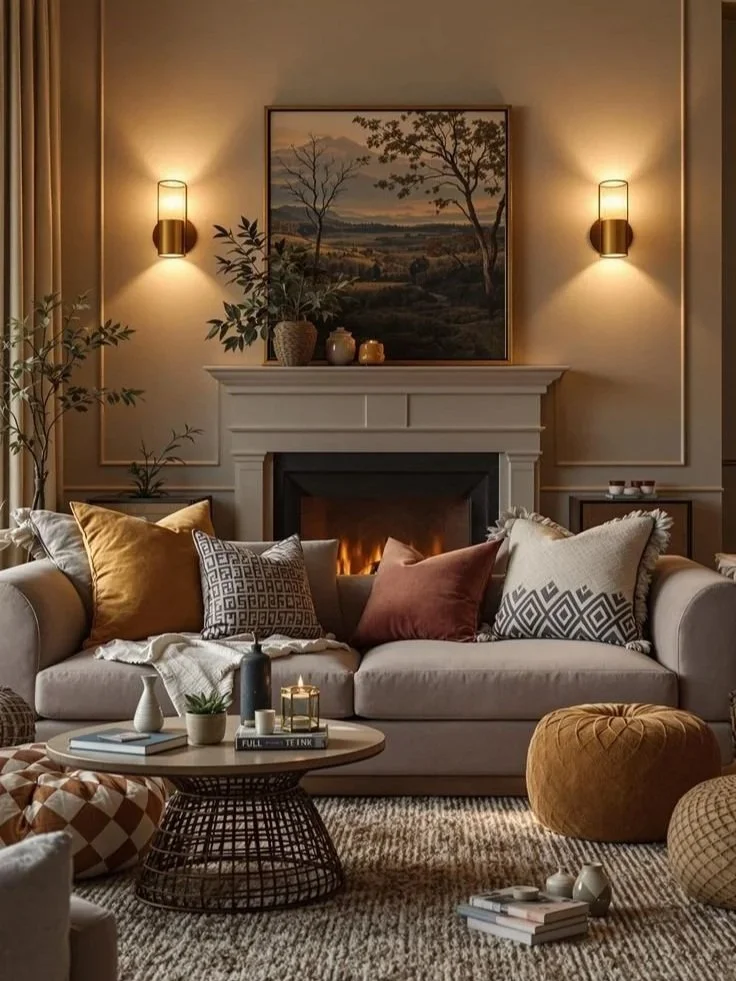
A beautiful chandelier can make a dramatic statement in a room—it’s bright, bold, and instantly eye-catching. But it shouldn’t be the only source of light. Picture dimming or turning off the chandelier and relying on table lamps or wall sconces instead. Suddenly, the entire atmosphere shifts into something warmer and more intimate. Lamps provide great task lighting for things like reading, but they’re also powerful tools for setting the mood. By layering ambient and accent lighting, you can create a more versatile, inviting, and dynamic space.
#5 Rushing the Decorating Process
A room should feel like it’s evolved over time. Rushing to buy all-new decor often results in a space that feels cold and lacking personality. Thoughtful, intentional design has far more impact than something thrown together quickly. Infuse your room with character by layering in heirlooms, travel keepsakes, and repurposed vintage pieces. For instance, turn a vintage map from a Paris trip into the backdrop for your favorite photo from the city. Repurpose your mom’s college trunk as a coffee table, or use your grandmother’s favorite crock as a vase. By blending items from different eras and experiences, you create a space that feels curated, personal, and inviting.

Image from Finding Silver Pennies
It’s completely normal to feel unsure when decorating your home. Often, just a few small tweaks can completely transform a space. Remember, this is your home—you don’t need to follow every rule or chase every trend. The goal is to make it work for you and reflect your personality.
If you ever feel stuck, we’re here to help. Reach out to learn more about our interior design services and how we can support you in creating a space that feels uniquely yours. Take a deep breath, relax, and remember: the only person you need to decorate for is yourself.